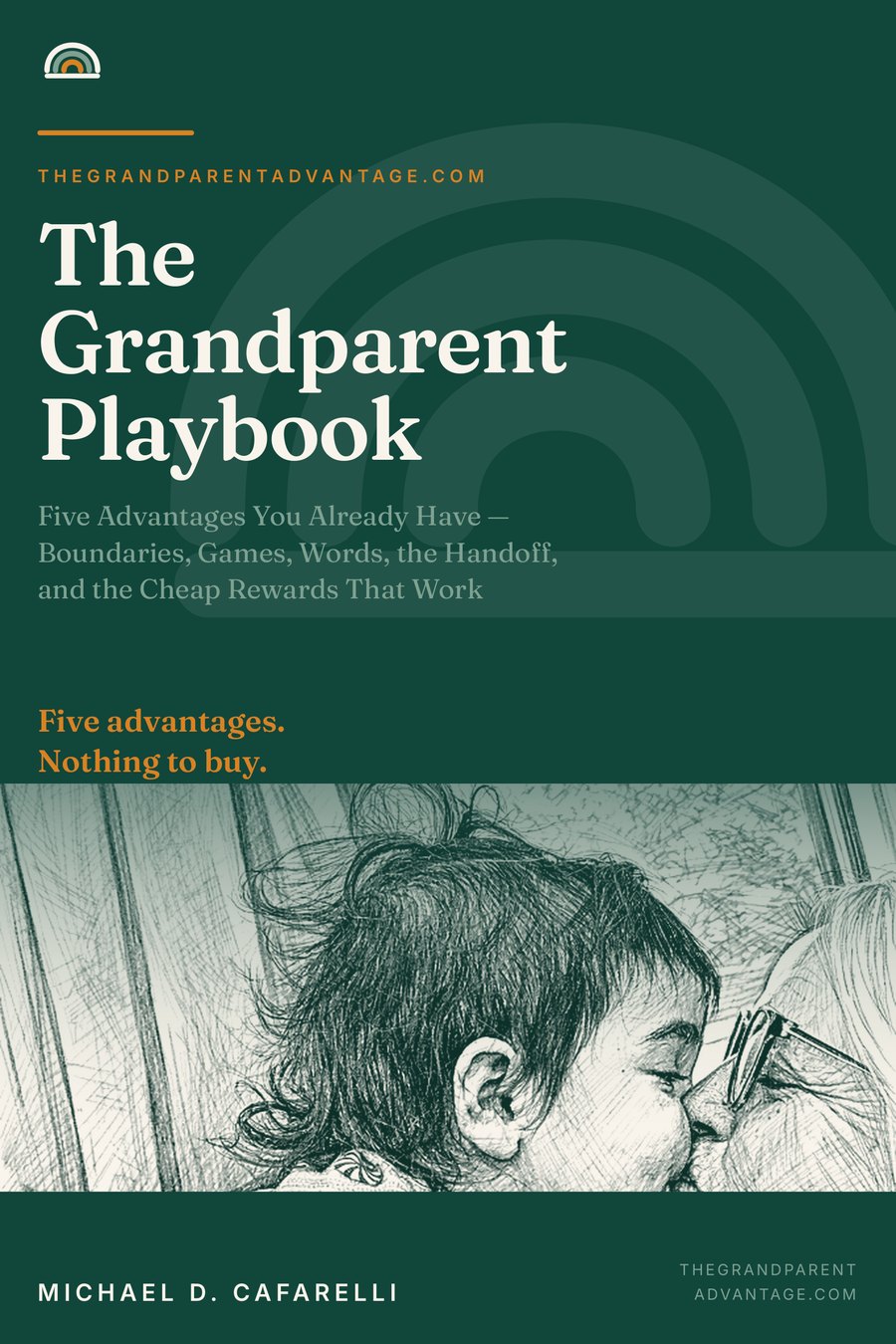
Start with one book if you want something to use this week, take both if you want
the whole picture, or take the course if you would rather be walked through it on video.
Start here
Either book on its own
$12.97 launch price
Each, digital, plus tax. Yours in minutes. Launch pricing until October 21.
Pick the one you need first. The Playbook is what to say and do this week; The Grandparent
Advantage is why any of it works.
- The Playbook — scripts, forty games, forty rewards under $10
- The Grandparent Advantage — thirteen chapters, built on the studies
Best value — most people start here
Both books together
$19.97 launch price
Plus tax. Both files, delivered together. Launch pricing until October 21.
The pair is how the system actually works: one book changes how you see the role, the other
tells you what to say on Tuesday afternoon. Cheaper than buying them separately.
- The Grandparent Advantage — thirteen chapters on all three advantages
- The Grandparent Playbook — scripts, games, rewards, the handoff
- Read on any phone, tablet or computer, or print them
Everything
The Complete Course
$67.97 launch price
Plus tax. Lifetime access. Launch pricing — $67.97 until October 21. Your price never changes.
Both books, plus six video modules and homework short enough that you finish it — and
you end with a written plan for all three advantages.
- Six modules, yours to keep
- Both books included
- Your own login, progress saved, printable plan
Prices in US dollars, tax calculated at checkout. Payment is handled by Stripe
— we never see your card. Digital delivery by email within minutes, and a
30-day refund policy on everything.